10 Best Affordable Homeowners Insurance Companies of 2026


- Homeowners insurance costs average around $1,500 - $2,300 annually but vary by location and the range of coverage provided.
- Larger insurance firms typically offer more comprehensive coverage options and discounts, while local insurers may better understand regional needs.
- Allstate stands out for its policy discounts and offers competitive rates averaging around $2,100–$2,400 yearly, alongside unique add-ons like garden repair and data recovery.
- Lemonade, recognized for its streamlined online services, uses artificial intelligence to quickly process claims and offers policies starting at $25 per month, but does not serve all states.
- State Farm offers an "Increased Dwelling Limit" for no extra cost, automatically extending replacement cost coverage by 20%, beneficial during construction cost spikes.
It's important for homeowners to remember that just because they have insurance doesn't necessarily mean their homes and belongings are fully protected. Different insurance policies and companies offer varying levels of coverage, and their needs may differ from those of their neighbors.
The cost of homeowners' insurance can also vary based on your location, but it typically averages around $1,500 - $2,300 per year.
To help you find the best home insurance providers in the country, PropertyNest's team of insurance experts has compared and rated various companies. While smaller local companies may better understand your area's specific requirements, larger national firms often offer a more comprehensive range of coverage options, discounts, experience, and better technology. Additionally, they tend to have excellent financial health.
Our team analyzed top companies' coverage offerings, discounts, customer satisfaction, other features, and pricing data to determine which company provided the best overall value for customers. Based on our research, we've identified the best home insurance companies for different needs.
What is the Best Homeowners Insurance?
From an array of policy discounts to full-cost home coverage, the following list presents the top homeowners insurance companies of 2026, each with its unique strengths:
- Allstate – Best for the Most Policy Discounts
- Lemonade – Best Online Home Insurance Company
- Liberty Mutual – Cheapest Homeowners Insurance
- Chubb – Best Insurance Coverage for High-Value Properties
- State Farm – Best Homeowners Insurance for Dwelling Coverage
- Farmers – Best Home Insurance for Its Extensive Agent Network
- Erie – Best Policy That Pays the Full Cost of Your Home
- Progressive – Best Homeowners Insurance for Tailored Plans
- Amica – Best Home Insurance for Handling Claims
- Nationwide – Best Homeowners Insurance for Exclusive Features
Our Top Choice

Allstate: Best for the Most Policy Discounts


Allstate is a well-recognized name in insurance nationwide and is generally thought of as a company that offers flexible coverage that meets the needs of the average homeowner.
It's also an excellent choice for homeowners looking for discount opportunities and those looking for an easy-to-navigate system.
This is important when filing insurance claims, which can be arduous and frustrating if you choose the wrong insurance carrier.
One of the drawbacks can be that coverage and payouts may be restrictive or capped.
Allstate's Homeowner's insurance rates are some of the most competitive in the market, averaging around $2,100–2,400 per year. As such, Allstate may not be the cheapest option in every market—but for some homeowners who value its brand, network of local agents, or available discounts, it remains a reasonable and competitive choice.
Allstate Home Insurance Coverage That Stands Out
Optional add-ons are not typical of insurance companies.
- Yard and garden repairs, including trees and landscaping.
- Recovery of personal electronic data like photos or videos.
- Guest medical coverage, also known as no-fault coverage.
What Makes Allstate Unique?
While most insurance companies offer discounts that usually come with bundling coverage, Allstate gives more opportunities with a wide range of unusual discounts not typically seen in the industry.
Allstate also offers a user-friendly website that's easy for customers to navigate.
Prospective customers can quickly get a free quote online, and policyholders have access to digital tools for filing claims.
Another area where Allstate stands out is its customer reviews and ratings, which tend to be higher than average and usually beat those of many other national companies.
Allstate Homeowners Insurance Discounts
- Bundling: You can save up to 25% if you bundle your home and auto policies with Allstate.
- Claim-free discount: If you haven’t filed a recent claim, you can save up to 20%.
- Easy Pay Plan: Auto-pay to pay your premium directly from your bank account will lead to a discount.
- Home Buyer Discount: You get a new home discount if you buy a newly constructed house.
- Safe Home Discount: You can get an insurance discount if your home has safety features such as cameras, additional door locks, and a security system.
- Welcome Discount: Becoming a new policyholder will get you a discount.
- 55 and Retired Discount: If you are older and do not go to your office, you'll get a home insurance discount.
Availability
Allstate does not currently offer new homeowners insurance policies in California, Connecticut, Florida and New Jersey. Read a full Allstate homeowners insurance review.
| PropertyNest Rating | 4.0 out of 5.0 |
|---|---|
| J.D. Power (out of 1,000) | 631 |
| A.M. Best - Financial Strength Rating | A+ |
| NAIC Complaint Index | 1.79 |
| BBB | A+ |
Lemonade: Best Online-Only Home Insurance Company


Lemonade is an excellent choice for home insurance because of its simplicity.
It’s an online-only insurance company that uses artificial intelligence to secure low home insurance rates for prospective policyholders.
Lemonade operates only through its website and mobile app. Both online platforms are simple and easy to use.
You can do anything you need from the app or website, such as signing up, filing a claim, adjusting your coverage, and canceling your policy.
Homeowners can get paid for a claim just minutes from the comfort of their homes. The response time is around three minutes without speaking to someone.
Traditional insurance companies often take months to pay a claim.
Lemonade offers homeowners insurance starting at $25 per month. This includes $100,000 property damage coverage and $1,000,000 liability coverage.
Homeowners can add coverage for things like jewelry, art, and computers. Lemonade also offers a variety of discounts, including a discount for installing smoke detectors and another for having a security system.
It's important to note that while Lemonade continues expanding its coverage territory, home insurance is not offered in all 50 states.
Lemonade Home Insurance Coverage
- It covers personal property stored in a self-storage unit for up to $1,000.
- A pet-healthy policy, available for as little as $10 per month, covers your pet if it gets sick or has an accident.
- The policy covers treatments, medical bills, medication, and more, which helps you save a lot of money.
What Makes Lemonade Insurance Unique?
Lemonade is very different from other insurance companies in how they make their money.
Because traditional insurance companies take home a bigger profit if you don't file claims (or your claims are denied), this can lead to a conflict of interest.
So, instead of profiting from unclaimed premiums, Lemonade charges a flat fee and donates whatever is left after paying claims and expenses to charities (the Lemonade Giveback).
| PropertyNest Rating | 4.5 out of 5.0 |
|---|---|
| BBB | B- |
| NAIC Complaint Index | 7.44 |
Liberty Mutual: Cheapest Homeowners Insurance


Liberty Mutual has been in business for over 110 years and offers exceptional products like auto, renters, and home and business insurance.
Its homeowner's insurance policy stands out among competitors for its relatively affordable prices.
On average, Liberty Mutual costs $1,230 per year or $102 per month for $250,000 in dwelling coverage.
In comparison, the national average for homeowners insurance costs $1,390 per year or $116 per month.
This means Liberty Mutual beat the US average.
In addition, Liberty Mutual is the cheapest insurer overall compared to each insurance company we reviewed.
Coverage That Stands Out
Liberty offers a replacement cost as an add-on. Suppose you must repair or replace your personal belongings after a covered peril. In that case, you’ll be reimbursed for the full cost of your items using today’s prices rather than the depreciated value.
Offers six safety discounts.
You can purchase coverage for as little as $5,000, making it a great option for young renters or those who live in small apartments such as a studio.
Blanket jewelry is one of the best in the industry. It replaces your stolen or lost jewelry without a deductible and an appraisal.
Liberty’s app has a variety of useful digital resources.
For example, the app allows you to quickly create a home inventory of your belongings if a covered peril damages or destroys them.
The inventory is useful for the insurer, as it will know exactly what to reimburse and by how much.
What Makes Liberty Mutual Unique?
Liberty Mutual’s online quote tool is very clean and intuitive. Its website is streamlined, and its app is a game-changer as it allows you to sign documents electronically.
In addition, Liberty Mutual is financially stable. As such, it can reimburse a claim on time even if a natural disaster strikes an area and results in a large number of simultaneous claims.
Read a full Liberty Mutual home insurance review.
| PropertyNest Rating | 4.5 out of 5.0 |
|---|---|
| J.D. Power (out of 1,000) | 596 |
| A.M. Best - Financial Strength Rating | A |
| BBB | A- |
| NAIC Complaint Index | 3.14 |
Chubb: Best Insurance Coverage for High-Value Properties


- Available in 50 states & Washington, D.C.
- Quote access: Agent only
Chubb is great for those who own expensive homes or luxury estates.
Because of that, you can select higher liability costs than the typical homeowners insurance policy, with coverage up to a high $100 million.
If you don’t want to rebuild your home after a total loss, the policy will offer you a cash settlement.
The Chubb Masterpiece policy offers to rebuild your home if the damage to your home exceeds the limit in your policy.
The policy covers many important things for wealthy policyholders and includes atypical features. Among many, these stand out.
If you own a second home, property managers can take care of it in case of an emergency, such as a wildfire or hurricane.
Also, the policy offers extended replacement costs for dwelling and replacement value for your high-priced personal possessions.
Chubb Home Insurance Coverage That Stands Out
- Security: if you live in a gated community, you’ll get a discount.
- Contracts with certified wildfire firefighters to help protect homes from wildfires that are common on the West Coast.
- If you lose your keys or they get stolen, the policy will put up new locks.
What Makes Chubb Unique?
Have a historic home worth over a million? You may be out of luck with some insurance companies.
Chubb is the only insurance company that specializes in covering homes and properties that are over a certain value.
Not only is your home very insurable with Chubb, but they are going to have the add-ons and plans that you need for your high-value possessions.
Chubb also offers arguably the best coverage for these pricey properties, particularly in high-risk areas prone to hurricanes and flooding.
While getting an insurance estimate from Chubb may be a chore, considering you have to speak to an agent, it also makes it easier to customize to your exact needs.
| PropertyNest Rating | 4.5 out of 5.0 |
|---|---|
| J.D. Power (out of 1,000) | 688 |
| A.M. Best - Financial Strength Rating | A++ |
| BBB | D- |
| NAIC Complaint Index | 0.09 |
State Farm: Best Homeowners Insurance for Dwelling Coverage


State Farm’s home insurance policy has great coverage and great customer service.
But what makes State Farm stand out is its “Increased Dwelling Limit.”
First, the increase is available at no cost to you.
As long as you’ve insured your home at least up to its estimated replacement cost, State Farm will automatically extend your replacement cost coverage up to 20%
For example, if the policy concludes that rebuilding your home will cost $200,000, that’s your dwelling coverage.
Now, say if a covered disaster strikes your home and construction costs and hiring a contractor go up, by default, the policy will pay you up to 20% more.
So, you’ll get $240,000 to rebuild your home.
State Farm Home Insurance Coverage That Stands Out
- State Farm’s website and app make it user-friendly to file a claim or get a quote from the comfort of your sofa.
- The site has a “find an agent” tool to connect you to a live customer service rep quickly.
What Makes State Farm Unique?
Sometimes, size and history matter.
State Farm seems to have proven that with its extensive network, which spans all 50 states and has been helping homeowners since 1922.
However, their agents aren't just scantily sprinkled here and there.
Their network is robust, which, in turn, gives their availability to their policyholders, especially when it comes to filing a claim.
They also simplify navigating homeowners insurance, making it perfect for first-time homeowners.
Plus, the ability to up your dwelling coverage at no additional cost doesn't hurt your cause either.
Read a full State Farm homeowners insurance review.
| PropertyNest Rating | 4.5 out of 5.0 |
|---|---|
| J.D. Power (out of 1,000) | 643 |
| A.M. Best - Financial Strength Rating | A++ |
| BBB | A+ |
| NAIC Complaint Index | 1.75 |
Farmers: Best Home Insurance for Its Extensive Agent Network

Customer service is ranked high for Farmers because you can call a live agent to buy a policy or make a claim.
Using a website or app for homeowners insurance is certainly convenient, but customers in the older range or technically challenged would rather consult with an agent.
Also, policyholders value building a relationship with an agent over time, so when it’s time to speak with a customer service rep, they get personalized coverage.
Farmers Home Insurance Coverage That Stands Out
- With optional coverage, if you need to replace large-item possessions such as a TV or an appliance, your policy will cover the current prices without depreciation.
- If you pay on time, you can get a discount.
- You can get a discount of up to 10% if you don’t make any claims for three years or more.
What Makes Farmers Insurance Unique?
Farmers is one of the largest insurance companies in the country, available in all 50 states with 48,000 agents.
It's easily one of the most accessible insurance companies for homeowners.
They also offer tiered coverage options, so it's easy for homeowners to purchase a policy that best fits their needs.
Farmers also offer more competitive premiums than most large brands.
Read a full Farmers homeowners insurance review.
| PropertyNest Rating | 4.5 out of 5.0 |
|---|---|
| J.D. Power (out of 1,000) | 609 |
| A.M. Best - Financial Strength Rating | A |
| BBB | A- |
| NAIC Complaint Index | 0.31 |
Erie: Best Policy That Pays the Full Cost of Your Home


Erie Insurance stands out for its guaranteed replacement cost coverage.
If your home is destroyed or damaged and is declared a total loss, Erie guarantees that it will pay the full cost to repair or replace your home, even if the expense exceeds the face value of your policy.
However, this policy, which is standard for Erie, is only available in only 13 states. The following states are covered according to their website: Illinois, Indiana, Kentucky, Maryland, New York, North Carolina, Ohio, Pennsylvania, Tennessee, Virginia, Washington D.C., West Virginia, and Wisconsin.
Erie Home Insurance Coverage That Stands Out
- Unlike competitors, Erie covers damage caused by falling trees or branches. This is part of Erie’s standard policy.
- Personal liability coverage follows you wherever you go in the world and is not just available when you are at home.
- Fire insurance is included in the standard policy.
What Makes Erie Insurance Unique?
Although Erie is currently only available in 13 states, it does exceedingly well to cover those homeowners.
With Erie, you're guaranteed the replacement cost of your valuables, and the option to fully rebuild your home regardless of the cost is rarely seen included with base coverage.
| PropertyNest Rating | 4.5 out of 5.0 |
|---|---|
| J.D. Power (out of 1,000) | 674 |
| A.M. Best - Financial Strength Rating | A+ |
| BBB | A+ |
| NAIC Complaint Index | 0.61 |
Progressive: Best Homeowners Insurance for Tailored Plans

Progressive homeowners insurance is among the most comprehensive and affordable in the industry.
The insurer wants you to save, offering three plan options to fit every budget.
Most insurers don’t allow you to choose; they only offer a basic policy, and to make it more comprehensive, you have to increase your coverage limits or add endorsements.
- The Basic Plan: This plan is at the lower end, lower than a basic plan. It is designed for those needing the most basic and simplest coverage. However, you receive less medical payment coverage and higher deductibles.
- Mid-Tier Plan: This is essentially the standard plan that every insurer offers.
- Deluxe Plan: If you purchase this plan, you’ll have a higher premium. However, you’ll get more replacement cost coverage, more liability limits, and water backup protection is included. With these three plans, you can save because you are only buying the coverage you need.
What Makes Progressive Unique?
Suppose you have Progressive insurance on your car, RV, or other vehicle and want all your insurance policies through the same company. In that case, you can bundle your home and auto together and get the multi-policy discount.
Also, besides excludable natural disasters like floods and earthquakes, Progressive offers sinkhole insurance and landslide and mudslide insurance.
In addition, Progressive has coverage for water backup that can damage your home and the property within it.
Progressive Home Insurance Coverage
- Progressive has an online HomeQuote tool, which allows you to compare quotes from multiple homeowners insurance providers.
- A basic policy never covers earthquakes and floods. And some insurers don’t even offer earthquake and flood insurance. Progressive allows you to buy insurance for both.
- You can buy additional coverage for personal injury suits, including cases like false arrest, wrongful eviction, and libel or slander.
| PropertyNest Rating | 4.0 out of 5.0 |
|---|---|
| J.D. Power Rating | 634 |
| A.M. Best - Financial Strength Rating | A+ |
| BBB Rating | A |
| NAIC Complaint Index | 14.74 |
Amica: Best Homeowners Insurance For Handling Claims


Amica offers some of the best coverage among other national companies.
Amica is known for offering coverage that's right for the policyholder, whether that's a package with just the basics or extended coverage for those who need it most.
Amica is rated one of the best home insurance companies, particularly for their customer service, and has perks and programs not normally offered by insurance companies.
They also have nearly as much coverage area as the major national insurance companies. Nonetheless, Amica Mutual's homeowners insurance is only offered in the 48 contiguous states of the United States, excluding Alaska and Hawaii.
Amica Home Insurance Coverage That Stands Out
- Home Business Coverage pays for work-related items such as computers and printers if lost or stolen.
- The policy also covers work-related injuries if you work from home.
What Makes Amica Unique?
Amica takes out the white gloves for its policyholders and customers.
Although you pay a little extra for your premiums, you get the service you want when filing a claim.
Filing a claim can become a headache in a potentially stressful circumstance you might find yourself in.
That's why ease of filing, plus getting the payout you need, can be worth every extra penny you pay for with Amica.
Amica also has many great discount opportunities and a contractor referral service for their customers.
In certain states, you can also buy into their dividend program that gives money back to you at the end of the year.
Amica Homeowners Insurance Discounts
- Security: You'll get a discount if you install a burglar alarm, multiple locks for your doors, a fire alarm, a sprinkler system, and more.
- Automatic Detection Devices: Homes equipped to monitor temperature, gas leaks, or water leaks will give you a discount.
- Home Credit: You may get a reduced rate if you buy new home equipment, such as appliances.
- Multipolicy Discount: You'll get a discount if you bundle your home insurance with auto or other policies.
- Claim-Free Discount: You're up for a discount if you don’t claim in three years.
- AutoPay: Signing up for automatic deductions to pay your bill can save you money.
- Loyalty Discount: If you’ve been with Amica for at least two years, you can get a discount.
- Paperless Discount: If you switch from paper bills to electronic bills and notifications, you’ll get a discount.
| PropertyNest Rating | 4.0 out of 5.0 |
|---|---|
| J.D. Power (out of 1,000) | 679 |
| A.M. Best - Financial Strength Rating | A+ |
| BBB | A+ |
| NAIC Complaint Index | 0.33 |
Nationwide: Best Homeowners Insurance for Exclusive Features
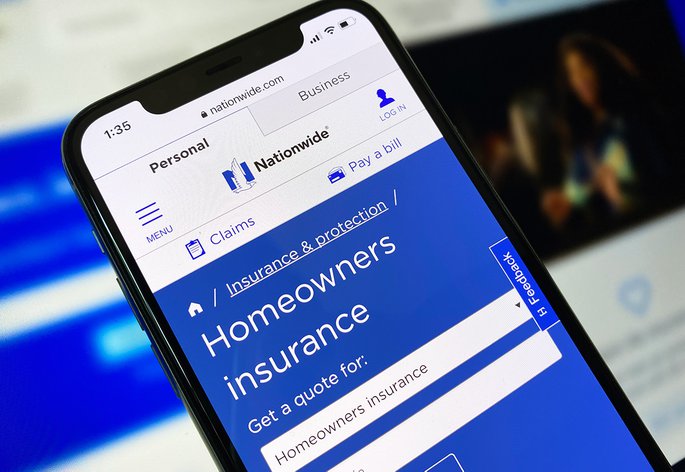
- Available in 44 states & Washington, D.C.
- Quote access: Online & by phone
Nationwide features standard coverage. But the company also has a type of insurance that other insurers often charge extra for.
If you have a covered loss and need to update your home to current building codes during repairs or renovations, Nationwide will cover you with a limit of up to 10% of your standard dwelling coverage.
If it costs more than expected to rebuild your home after a covered disaster, Nationwide will raise your dwelling coverage to 20% above your policy limit.
Nationwide Home Insurance Coverage That Stands Out
- Home renovation credit. You'll get a discount if you update your plumbing, electrical, and HVAC.
- Roof replacement pays to rebuild your roof with stronger materials if it’s damaged for a covered reason.
- Nationwide will pay to replace brand-new possessions in full or restore damaged belongings, which is not usually customary.
What Makes Nationwide Insurance Unique?
As the title suggests, Nationwide has all kinds of special add-ons, so any homeowner can best customize their coverage to fit their needs.
What's more, is that Nationwide offers plenty of opportunities to qualify for discounts and has a relatively easy-to-use website to apply and file claims.
| PropertyNest Rating | 4.0 out of 5.0 |
|---|---|
| J.D. Power (out of 1,000) | 641 |
| A.M. Best - Financial Strength Rating | A |
| BBB | A+ |
| NAIC Complaint Index | 0.97 |
| Company | PropertyNest Rating | J.D. Power (out of 1,000) | A.M Best Rating | BBB Rating |
|---|---|---|---|---|
| Allstate | 5.0 | 815 | A+ | A- |
| Lemonade | 4.5 | 870* | Not Rated | B+ |
| Liberty Mutual | 4.5 | 805 | A | A+ |
| Chubb | 4.5 | 809 | A++ | D- |
| State Farm | 4.5 | 829 | A++ | A+ |
| Farmers | 4.5 | 839* | A | A- |
| Erie Insurance | 4.5 | 827 | A+ | A+ |
| Progressive | 4.0 | 819* | A+ | Not Rated |
| Amica | 4.0 | 849 | A+ | A+ |
| Nationwide | 4.0 | 816 | A+ | A+ |
Compare the Best Local Homeowners Insurance Companies
We've made our recommendations above based on insurers that are widely available throughout the country. But we found some of the best and cheapest for homeowners were locally-based insurance companies:
Is Homeowners Insurance Mandatory?
Homeowners insurance coverage is not required by law. However, if you have a mortgage, the lender will most likely require you to insure your home to protect its investment.
But even if you don’t have a mortgage, it’s best to get a policy because it gives you peace of mind.
What is the Average Cost of Homeowners Insurance?
A typical average cost of homeowners insurance in the US is around $1,500-$2,300 a year.
But depending on your location and the extra coverage you buy, it will affect your total cost.
Learn more about homeowners insurance costs by state.
For a detailed look at your cost, the following is what insurers typically consider when giving you a quote:
- The amount to rebuild your property.
- The condition and age of your home.
- Distance from your home to the nearest fire hydrant.
- Your town’s fire protection rating.
- Your claims history.
- Your coverages, limits, and deductible.
Learn what type of homeowners insurance coverage you need to insure from fire damage.
How Does Homeowners Insurance Work?
You want a policy that fits your needs. It should cover the right amount for your property and belongings or offer add-ons that increase your coverage for expensive items like jewelry and art.
Homeowners insurance protects your home and personal possessions due to damage caused by theft, fire, or vandalism. It also covers liability and bodily damage.
It protects your most valuable assets, so you don’t have to pay out of pocket for damages, say, from your dog biting your neighbor on your property.
If you didn’t have home insurance, you would have to cover medical bills and related expenses.
So homeowners insurance protects you from unforeseen financial setbacks.
Which Homeowners Insurance is Right For You?
When purchasing homeowners insurance, premiums and rates should be just one of the many factors you consider.
There might be some overlap in the type of coverage, ease of claim filing, or premiums between the top insurance companies we named, but each one of them is at least a little bit better than others for different things.
For example, Amica is known for special perks and great customer service when processing insurance claims.
Chubb is best known for the coverage their policies offer for high-valued properties.
Lemonade offers excellent premiums and functions online for those who prefer to avoid phone calls.
The type of coverage and add-ons should be your primary concern, particularly regarding how much of your dwelling and possessions are covered, how much deductibles are, and whether the policy will cover costs to rebuild your home.
Customer service should also be paramount when considering policies because, with the right company, it can be a smooth experience to get your insurance claims processed but a nightmare with the wrong company.
So, it's important to do your research.
What Does Homeowners Insurance Cover?
While coverage may vary from policy to policy, the standard home insurance varies little and always covers six distinct types of coverage.
| Dwelling | Covers damage to your house and attached structures like a porch. Covers stand-alone structures on your property, such as a fence or a shed. |
|---|---|
| Cost | For damage to your house, the insurance will pay enough to rebuild your house or structure. For damage to stand-alone structures, the insurance will typically pay you 10% of your dwelling coverage. |
| Personal Property | Pays to repair or replace belongings that are stolen or damaged in a covered event. Cost: 50% to 70% of your dwelling coverage |
| Living Expenses | Pays temporary living expenses while your home is repaired or damaged and which must be covered by your policy, such as lodging, meals, and other extra expenses, like laundry service. Cost: 20% of dwelling coverage |
| Liability | Pays if you injure someone or cause property damage unintentionally or through neglect. Liability coverage also pays for legal defense and settlements if you are sued for an injury or property damage. Cost: $100,000 to $500,000. |
| Medical | Pays if someone is injured on your property and needs medical treatment, regardless of who’s at fault. Also pays if you, a family member, or a pet like a dog injures someone elsewhere. Cost: $1,000 to $5,000. |
Are Appliances Covered Under Homeowners Insurance?
Homeowners' Insurance does not cover repairing or replacing an appliance due to normal wear and tear.
However, homeowners policies provide coverage for appliances lost specifically caused by natural disasters such as fire, lightning strikes, or wind.
For more extensive coverage of appliances, homeowners can shop for a home warranty plan that can cover all their appliances. Home warranties, unlike insurance, cover wear and tear and just age.
What Is Not Covered by a Standard Homeowners Policy?
Standard homeowners insurance policies typically do not cover valuable jewelry, artwork, or other collectibles.
These are often bought as a secondary investment and can be expensive depending on their condition.
To protect them, you should purchase special coverage through your agent, which includes protection from damage caused by an earthquake or flood.
Many insurance companies will not cover problems such as sewer line back-ups, pest infestations, or mold.
Perils Not Covered By Homeowners Insurance
Most common exclusions are named perils, such as flooding due to weather events such as hurricanes and storms, other natural disasters such as mudslides or earthquakes, or man-made catastrophic events like war, government action, or power outages or surges.
Damage or disrepair due to neglect or lack of maintenance will also get you a denied claim, not to mention that intentional damage is most certainly excluded.
Liability Exclusion
One of the most commonly excluded scenarios for liability is dog bites or attacks. Some insurance companies exclude certain breeds from coverage.
Others will have a blanket exclusion for all dogs.
The intentional assault or damage of someone else's being or property would also not be covered under liability or medical expenses.
How to Compare Homeowners Insurance
If you want the most affordable policy, compare quotes and look at discounts. Get price quotes from multiple companies.
Go online to a company’s website and see if you can get free quotes.
Find information about a company regarding how fast it can reimburse you for a claim.
Once you find a company you like, research it thoroughly to see what coverage it has and what coverage it doesn’t have.
Look at sites about home insurance that give you rankings of the best policies and why.
Often, these sites will provide you with ratings for different home insurance companies. You should be on the lookout for how many stars insurance was given or the number of positive reviews.
For example, check out the Better Business Bureau (BBB) to see what grades it gives to homeowners insurance companies.
Once you are through, you’ll have a ballpark figure of not only the cost of the policy but also the amount of additional coverage you may need to cover valuable items like expensive clothing and artwork.
Remember, a standard policy will only cover a limited expense not up to the full value of your most prized possessions.
This is why you should get a rider or additional coverage from a company to cover your expensive items like jewelry.
Also, remember that the more coverage you add, the more you’ll have to pay.

How Much Homeowners Insurance Do You Need?
If you can ascertain the cost to rebuild your house if it gets destroyed, this is the foundation and starting point of how much insurance you need.
The amount is called your dwelling coverage.
After adding in add-ons, umbrella insurance, and insurance riders (also an add-on to an insurance policy that amends a basic policy), you’ll be able to figure out how much extra funds you need in addition to the cost of a basic policy.
If you still don’t know how much additional coverage you need, try to price each prized belonging.
If you have receipts, that’s even better.
This is called a home inventory and is the best way to designate how much it would cost to replace your items.
Moreover, having an inventory could prove beneficial when filing a claim.
Once you do your home inventory, only then will you be able to choose wisely regarding coverage.
What Additional Coverage Do You Need?
Dwelling insurance should mirror the expenses incurred to reconstruct or mend your home, considering labor charges, contractor fees, and required material costs.
Remember that numerous policies have capped payouts, emphasizing the need to consider full replacement cost coverage.
Often, this added policy will pay the full cost to rebuild or repair your home.
Expensive Possessions
You should also “schedule” high-priced belongings.
A company will only pay a certain amount for items like expensive jewelry.
If you need more protection coverage, you can “schedule” them for their appraised value.
“Schedule” is a supplemental policy that extends coverage.
By buying a scheduled personal property policy, owners can ensure full coverage of expensive items, such as jewelry, in case of a claim.
Replacement Cost vs. Actual Cash Value (ACV)
Replacement cost coverage is better than ACV because it pays to replace something like an expensive laptop by giving you a brand-new, comparable version.
In contrast, ACV only reimburses you for an item’s depreciated amount.
So, if your expensive laptop is five years old and was damaged or destroyed, expect only to be reimbursed for a five-year-old laptop.
So. it’s wise to choose replacement cost coverage to recover your items.
Additional Liability
Standard liability insurance pays for injuries and property damage. If your liability coverage is low, you may have to pay out of pocket for any amount over your policy limit.
The best way to protect yourself and others is to buy a sufficient amount of liability insurance.
Don’t know how much? The general rule is to buy enough insurance that covers your net worth or the cost you stand to lose if you are sued after injuring someone.
This is called umbrella insurance.
Umbrella insurance is a cost-effective method to increase your liability coverage.
Also, if there are features on your property, like a trampoline or a pool, that raise your liability risk because these items are more susceptible to injuring someone, you should get additional coverage.
Buy Additional Insurance for Natural Disasters
Natural disaster insurance is crucial as conventional home insurance typically does not encompass floods, earthquakes, or landslides.
For instance, while your policy might protect against water damage from a hurricane-induced roof leak, it would not cover flood damage from the same event.
For coverage, you need special policies such as flood insurance or earthquake insurance.
Read more: Best Flood Insurance Companies
How to Get a Discount on Your Homeowners Insurance Policy
If your premium seems too high, many policies offer discounts. Below are the most commonly seen discounts with insurance companies.
However, it's important to inquire directly with your insurance company as your company may either not offer these discounts or have additional ones you might qualify for.
| Bundling | Discounts for bundling multiple properties or auto and home insurance together. |
|---|---|
| Security Systems | If you have a home security system, deadbolt locks, burglar alarms, and more, you’ll get a lower rate. |
| Automatic Detection Devices | Homes equipped to monitor temperature, gas leaks, or water leaks, will give you a discount. |
| Home Credit | If you buy new home equipment such as appliances, you qualify for a reduced rate. |
| Claim-Free Discount | If you don’t make a claim in a set time that varies from policy to policy. you’re also entitled to a discount. |

Our Methodology
We thoroughly researched the state's top homeowners’ insurance companies and narrowed the list down to those operated in the U.S.
We rated them on criteria that included ease of use, ratings, financial strength, customer, and affordability.
How We Ranked and Picked the Best Homeowners Insurance Companies
There are many homeowners insurance companies on the market, and it can be hard to differentiate which is best and which is affordable.
In making our selection, we took many factors into account, including customer reviews, policy discount offers, and customer service.
The following criteria had the biggest impact on which insurance to put on our list.
Research
To find the best companies that provide homeowners insurance, we looked at sites that reviewed homeowners’ policies and rated them highly by rating organizations like A.M. Best (an independent company), BBB (Better Business Bureau), and NAIC (National Association of Insurance Commissioners).
Customer Reviews
We looked at customer reviews from many sites.
Pricing
Most people need additional coverage to protect their assets. It turns out that a standard policy is insufficient for many as the policies only cover the most basic features.
So, we considered how much it would cost to cover additional coverage.
Features
We also looked at companies that had the best features specific to their category, from the best policy that fully insures a home after a fire to the best policy that had excellent customer service.
Finally, we prioritized insurance companies offering distinctive features, such as policies covering veterinary visits and medical bills if your pet falls ill.
So, we also chose homeowners insurance that we felt was a fair balance between price and highly-coveted features.
- Selection Criteria: Companies are chosen based on customer service, affordability, and coverage diversity.
- Data Collection: Data is amassed from credible sources, customer surveys, and industry reports.
- Analysis: A robust analysis, employing a scoring system, is conducted to rank the companies.
- Updating: This page is regularly updated to offer the most current information.
- Editorial Integrity: We uphold a transparent editorial process and disclose any affiliations.
- User Engagement: User feedback is integral and factored into our evaluations.
- Accessibility and Usability: Our page is crafted for ease of use, mobile optimization, and wide accessibility.
- Editorial Independence: Our editors and writers work independently, free from influence by advertisers.
- Source Disclosure: All data sources are disclosed and credited.
- Conflict of Interest: Any potential conflict of interest is disclosed to maintain integrity.
- Reviewer Qualifications: The qualifications of reviewers and contributors are provided.
- Update Frequency: The frequency of updates and revisions is clearly stated.
- Correction Policy: A clear policy for correcting errors is in place to uphold accuracy and trust.